
 Data Analytics for the Project Manager
Intentional hybrid project management helps project managers balance structure with adaptability so projects deliver real value. It keeps the focus on what works, not what’s trendy.

Video presentation link is included at the end of this article.
What is “Hybrid” in Project Management?
When someone mentions “hybrid”, the conversation often shifts toward remote versus in-person work.
However, Alan Zucker’s association to the word “hybrid” actually comes from a personal experience outside of project management—specifically, cycling.
“About thirty years ago, right after my son was born, I was actively training for triathlons and wanted to include him in my routine. I invested in a jog stroller and a trailer, but was uncertain about which bike to use for pulling it.
My race bike, much like a sports car, wasn’t practical for this purpose. A fellow cyclist suggested I consider a mountain bike—rugged and versatile, similar to having a jeep.
He also threw in the option of a “hybrid” option, likening it to a Prius: practical, but lacking a certain appeal.”

Project Outcomes
When we look at our projects and our ability to effectively execute projects, the results leave much to be desired.
According to the PMI Pulse of the Profession Report, data from cost analyses and standards groups reveal that approximately 10 to 15% of projects fail outright, while only about half are completed on time and within budget—an outcome that is far from ideal.
Notably, the various approaches we use for the projects don’t really seem to help make a huge difference.
This brings us to the theme of this discussion: Intentional Hybrid Project Management.

The term “hybrid” is deliberately understated here, because, in reality, nearly all of our projects today involve some degree of hybridization.
Understanding and navigating these hybrid environments intentionally is essential for better project outcomes.
What Does “Intentional Hybrid” Mean?
To ensure clarity, let’s start with some definitions.
Intentionality means acting deliberately, making calculated decisions, and carefully considering each step in the process.
“Hybrid” is flexible; it refers to using a mix of different practices and elements within project management.

The concept of hybrid project management gained attention around 2019, when PMI revised the PMP exam to include roughly half predictive questions and about a quarter focused on agile and hybrid topics.
Interestingly, at that time, online discussions were still heavily centered on agile, with little mention of hybrids.
However, the popularity of “hybrid” has surged, while “agile” discussions have tapered off.
This shift piqued interest—
When considering predictive project management, it originates from industries like construction and defense.
These projects rely on extensive upfront planning, where architects and engineers map out tasks and deliverables.
Execution is generally top-down, with core specialists and subcontractors coordinating their responsibilities.
Standard methodologies such as PERT charts and the critical path method emerged from defense initiatives in the 1950s.
Which leads us to the waterfall approach.
What is the Waterfall Approach?

The waterfall approach, popularized by Winston Royce in 1970, described a beautiful cascade of sequencing processes.
He coined this on the first page of a published article , but unfortunately, nobody really ever got to the third or fourth page of the articles, because Royce also said that we really need feedback loops.
And when you start adding those feedback loops into our projects begins to look a lot like agile, doesn’t it?
What is Agile Project Management? How does it compete with Predictive Project Management?
Predictive vs Agile Project Management
Agile focus on iterative and incremental delivery. It does this with empowered, self-managing teams.
Work is divided into periodic, manageable pieces, allowing for continual feedback that can either correct previous efforts or reinforce good ideas moving forward.
We know these as sprints.
Agile project environments typically address complex problems where the solution isn’t straightforward.
This approach aims to unlock the team’s creative potential and collective wisdom. Agile principles connect to broader thinking.

There are more than 120 distinct agile methodologies and frameworks, demonstrating that agile is not a single prescriptive method but a set of evolving values and principles.
Agile is NOT carved in stone—it adapts over time and is open to reinterpretation.
Some view project management methodologies as a spectrum: predictive at one end, agile at the other, with hybrid models in the middle.
However, this linear spectrum does not fully capture the dynamic choices project managers face, and thinking beyond this binary is crucial for effective project delivery.
The Spectrum of Agile, Lean, & Predictive Practices
The choice in project management is not simply between predictive or agile approaches.
This binary perspective overlooks important methodologies like lean and combined practices.
Lean emphasizes:
- Reducing waste
- Delivering value efficiently
- Continuously improving workflow
It represents a set of principles focused on:
- Value creation
- Flow optimization
- Eliminating delays, excess inventory, and any form of waste
Combining predictive and agile methods with an intentional focus on maximizing value delivery is increasingly common.

This blend is chosen deliberately based on various contextual factors such as the nature of the project, organizational culture, team dynamics, requirements, and risk considerations.
Ultimately, the goal is to select the right approach tailored to each project’s unique context.
This complex decision-making process has no one-size-fits-all formula, which makes intentionality in choosing and applying project management methods essential.
Common Misconceptions About Hybrid Project Management
Let’s shift focus to address some common misconceptions about hybrid project management.
A frequent misunderstanding is that hybrid simply involves mixing a bit of waterfall with a bit of agile and hoping the combination works. This ad hoc approach is ineffective.
True intentional hybrid project management requires thoughtful selection of practices based on a clear understanding of the project’s specific needs.
It is about choosing what makes the most sense, not mixing methods arbitrarily. Another misconception is that hybrid approaches only suit certain industries or project types. In reality, hybrid can be applied anywhere there’s a need to balance predictability with adaptability.
The key is aligning the delivery approach to the unique challenges of the problem at hand.
The last misconception is that hybrid is a passing trend or phase. However, given the complexity and constant change in today’s work environment, hybrid project management is here to stay. It enables organizations to remain agile and adaptive while effectively managing risks and expectations.
The Importance of Intentionality in Hybrid Projects
Intentional hybrid project management centers on deliberate selection and tailoring of practices.
It recognizes that there is no one-size-fits-all solution and emphasizes a deep understanding of project context, constraints, and stakeholder needs to guide thoughtful decisions.
An organization may have a core predictive framework due to established requirements, yet selectively incorporate agile practices for specific teams or apply lean principles to enhance workflow and eliminate waste.
The crucial element is that hybridity is intentional and transparent.
When everyone understands why the chosen approach fits the situation and agrees on it, trust and clarity are established. Without this intentionality, hybrid methods risk becoming disorganized or internally conflicting.
Flexibility, Learning, & Continuous Adaptation
An essential component of hybrid project management is flexibility coupled with continuous learning.
As markets, technologies, and teams evolve, approaches that succeeded in one project may not be effective in another. Ongoing assessment, feedback gathering, and adaptation are critical.
Strong communication and leadership play a vital role in guiding teams through change and uncertainty. Ultimately, intentional hybrid project management aims to maximize the chances of project success by applying the most appropriate tools, methods, and mindsets for the specific work at hand.
Recap and Final Thoughts
As a recap, intentional hybrid project management is a pragmatic approach that values adaptability and predictability. It requires understanding your project context and selecting the best methods accordingly.
At its core, it emphasizes intentionality — making deliberate choices — rather than blindly following a single methodology.
Many organizations are finding that hybrid is not just a compromise but a powerful way to unlock innovation while maintaining control.


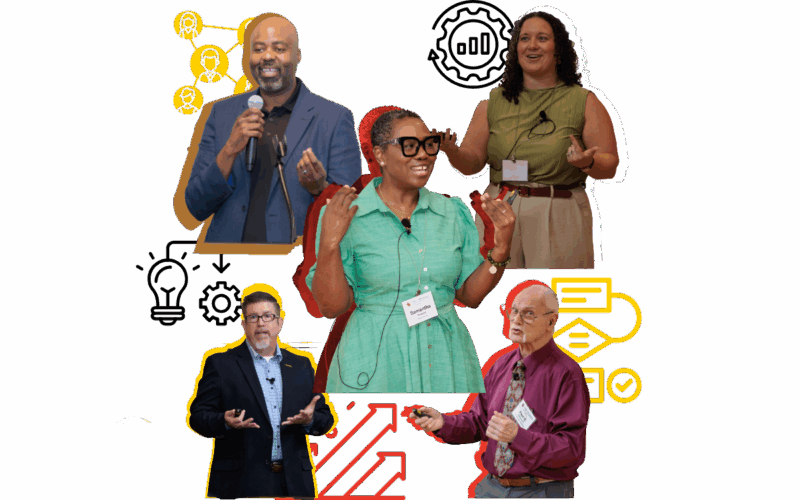
Project Management Symposium
Like this presentation?
You should join us at this year’s Project Management Symposium.
Visit our Website HERE to learn more!
Project Management Programs
Are you looking to expand your project management skills?
With more than 50 courses and 17 professional certifications, our programs are built by industry experts and UMD faculty to address real-world challenges in today’s workplaces.

Some of our most popular certifications include:
-
- Agile Project Management – Navigate complex projects with adaptive frameworks.
- Construction Management – Strengthen your management expertise in construction projects.
- Artificial Intelligence in Government Procurement – Unlock the power of artificial intelligence to revolutionize government procurement.
- Project Management Professional (PMP) Exam Prep Training – Prepare for the PMP exam with confidence.

Posted by mfriday on January 12, 2026
