 Data Analytics for the Project Manager
Mentoring is one of the most powerful ways project managers can shape the next generation—and it doesn’t require a certain age, title, or number of years in the field.


What Mentorship Really Is (and Isn’t)
For this conversation, a mentor is an experienced and trusted advisor or guide.
A mentor typically has more experience in some area—career, skills, or life—but they don’t have to be older or more senior in every way.
You can mentor a peer, be mentored by someone younger, and often play both roles at once.

Mentorship can be formal or informal; you rarely “propose” with a ring and a contract. More often, it grows naturally from repeated conversations, advice, and mutual respect.
Why Mentorship Matters: Professional and Psychological Benefits
Mentorship brings both professional and psychological benefits for everyone involved.
On the professional side, it can accelerate skill development, open doors to new roles, increase visibility in a field, and improve job performance.
Psychologically, it can boost confidence, clarify identity and purpose, and increase job satisfaction.
These benefits don’t stop with the two people in the relationship.
They ripple out into workplaces, research institutions, and personal networks as mentees and mentors carry what they’ve learned into other spaces.

Project managers are uniquely suited to mentoring: they’re used to tracking details, juggling multiple priorities, checking in on people, and caring about how work gets done—not just whether it gets done.
The Mentee’s Perspective: More Than Just Receiving Advice
You might be in a “mentee phase” if you’re at a crossroads, exploring a new career, seeking guidance, or just feeling ready for something different.
A mentee isn’t empty-handed, though.
You bring your own experiences, perspectives, and feedback that can help a mentor grow as a leader. You might need help with specific skills (Excel, networking, communication), with broad questions about direction, or with navigating a new identity or environment.

Key challenges for mentees include finding the right fit and knowing where to look. Both are opportunities to be intentional instead of reactive.
Defining What You Need from a Mentor
Before you start reaching out, it helps to have an honest conversation with yourself about what you’re seeking.
This can be as simple as sitting down with a notebook or your laptop and answering a few questions:
-
Why am I seeking a mentor right now?
-
What do I want to gain: skills, perspective, accountability, encouragement?
-
Which skills or areas do I want to grow in—technical, interpersonal, career navigation?
-
What values matter to me in this relationship (e.g., honesty, empathy, ambition)?
-
Are there identity factors that are important (shared background, industry, lived experience)?
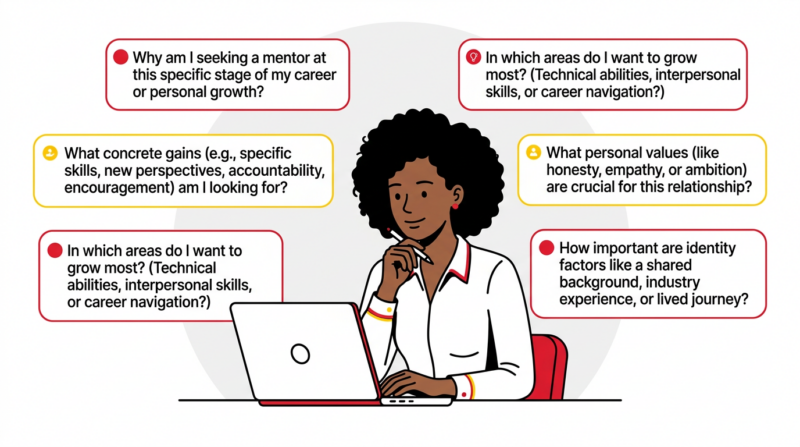
This reflection turns “I should find a mentor” into a clearer search for a specific kind of partner.
Where to Find Mentors in Real Life
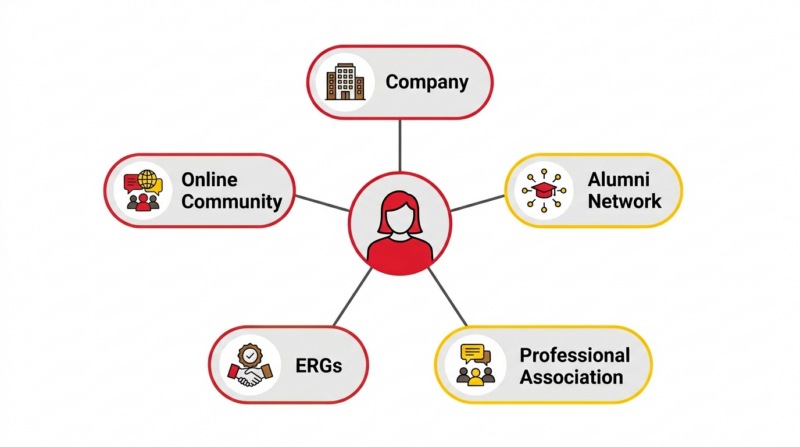
Once you know what you’re looking for, you can start scanning for mentors in places you already belong:
-
Your current organization: People in other departments (engineering, marketing, HR, finance) often have skills you’d like to develop, and you already share context and relationships.
-
University alumni networks: Alumni groups provide built-in common ground and often have mentorship programs or career services open to graduates, not just students.
-
LinkedIn: You can search by role, industry, school, or location, and reach out via warm connections or posts. It’s not a “mentorship app,” but it functions like one if you use it intentionally.
-
Professional and industry associations: Groups like PMI and local chapters often run structured mentorship programs where you can volunteer as a mentor or apply as a mentee.
-
Employee resource groups / teammate resource groups: Identity-based or interest-based groups (e.g., women in tech) often seed mentorship relationships naturally and sometimes have formal programs.
-
Online communities and social media groups: Spaces like “Black Women in Tech” or “Black Women in Project & Program Management” can connect you with mentors and mentees who share experiences and can cut through noisy, generic advice.
These examples from the audience show that mentorship can grow in many places—as long as you’re willing to reach out and respond when opportunities appear.
Why Mentorship Matters So Much for Project Managers
For project managers in particular, mentorship isn’t a “nice to have”; it’s a way to move the discipline and the workplace forward.
Project work is fundamentally about people, communication, and change.
Mentoring the next generation of PMs spreads good practices faster than any template and builds resilience into the profession.
It’s also a way to keep the “human touch” and genuine joy in a world increasingly shaped by tools and automation.
The MENTOR Framework: A Practical Guide for Mentors
To make mentoring more tangible, Tessa offers a simple acronym: MENTOR. Each letter represents a practice you can bring into your mentoring relationships.

M – Model: Practice What You Preach
Model the behaviors and standards you encourage.

If you ask your mentee to be on time, be punctual yourself. If you urge them to set boundaries, demonstrate that in your own schedule. When tough conversations arise—as they will—model honest, respectful communication instead of avoiding the issue. This is how you show, not just tell, what good looks like.
E – Encourage: Support Ideas and Confidence
Mentors are often the first people to say, “You can do this.”

Encouragement means listening, validating feelings, and reinforcing your mentee’s strengths while they face challenges. It might be helping them respond to a harsh client email, reminding them they’re capable, and backing them as they try again. Consistent encouragement helps mentees take risks, experiment, and grow.
N – Navigate: Be a Guide on the Journey
Mentors have the advantage of perspective—you’ve seen more paths and outcomes over time.

Use that to help mentees navigate crossroads: switching careers, taking on new responsibilities, or stepping away from roles that don’t fit. You’re not deciding for them; you’re helping them map options, understand trade-offs, and see what their choices might lead to.
T – Time: Commit and Be Present
Strong mentoring relationships require time and presence.

That means being realistic about your capacity before you say yes, and then honoring the commitment. Agree on how often you’ll meet, what format works best (coffee, video calls, walking meetings), and how you’ll use your time together. When you’re with your mentee, be present—phones away, notifications off, agenda clear enough to focus on them.
O – Opportunity: Share Resources and Open Doors
Great mentors go beyond advice; they create and share opportunities.
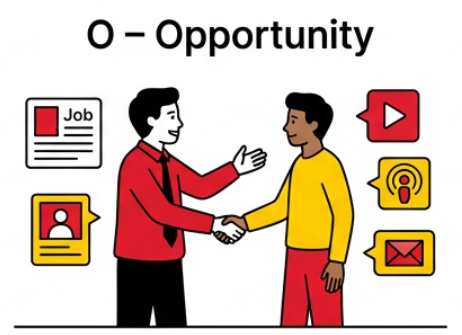
That can look like introducing a mentee to someone in your network, forwarding a job posting, sharing a podcast or article tied to their goals, or inviting them to shadow you in a meeting. Think of yourself as the watering can and your mentee as a seedling—you’re providing conditions for growth they might not access on their own.
R – Recognize: Offer Affirmation and Feedback
Everyone wants to know when they’re doing something well.

Recognition can be as simple as “You handled that conversation really well” or “Your presentation was clear and compelling.”
Regular, specific praise builds confidence. Constructive feedback matters too: honest, actionable insights delivered with care help mentees adjust and grow without feeling defeated.
Bringing It All Together: Start Small and Human
You don’t have to implement every part of the MENTOR framework at once.
Choose one element to focus on first—maybe being more intentional about time, or more consistent in offering recognition—and build from there.
Strong mentors and strong mentee relationships are grown, not instantly created.
For project managers, this is an extension of the work you already do: listening, coordinating, guiding, and caring about outcomes and people.
When you apply those same skills beyond the project—into mentoring—you help shape better PMs, better teams, and, over time, better workplaces.
Which part of the MENTOR framework feels most natural for you to start practicing this week?


Project Management Symposium
Like this presentation?
You should join us at this year’s Project Management Symposium.
Visit our Website HERE to learn more!
Project Management Programs
Are you looking to expand your project management skills?
With more than 50 courses and 17 professional certifications, our programs are built by industry experts and UMD faculty to address real-world challenges in today’s workplaces.

Some of our most popular certifications include:
-
- Agile Project Management – Navigate complex projects with adaptive frameworks.
- Construction Management – Strengthen your management expertise in construction projects.
- Artificial Intelligence in Government Procurement – Unlock the power of artificial intelligence to revolutionize government procurement.
- Project Management Professional (PMP) Exam Prep Training – Prepare for the PMP exam with confidence.

Posted by mfriday on March 10, 2026
