
 Data Analytics for the Project Manager
In government, everyone is chasing modernization and AI, but most agencies still plan and fund work the same way they did a decade ago.
Bill Bunce argues that to keep up, we need to move from project-based budgeting to team-based, outcome-focused funding.

Why Traditional Projects Keep Failing
Bunce starts with a familiar reality: federal projects fail at staggering levels every year.
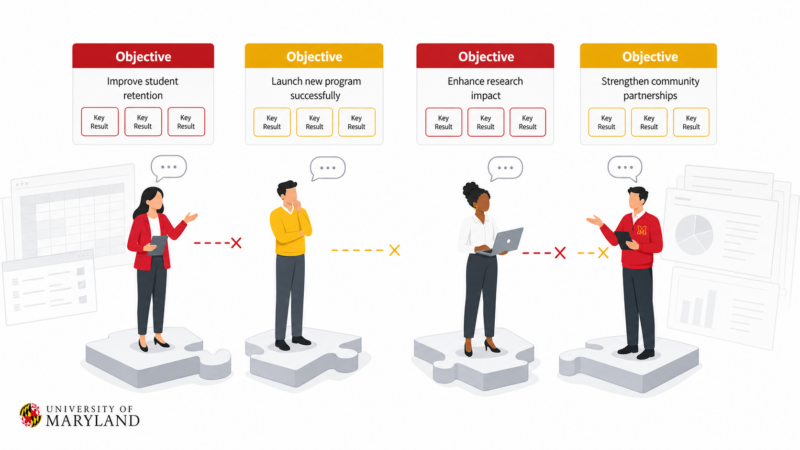
In his view, the biggest reasons are not just scope creep and insufficient resources, but a breakdown in communication and collaboration.
Even when objectives and key results (OKRs) are clearly defined, projects can go off the rails if:
-
Communication fails from the top down
-
Teams working on related efforts don’t talk to each other
-
No one is looking across projects to see how they connect
Better spreadsheets and better slide decks won’t fix that kind of problem.
Strategy Without Execution
Every agency has a strategic plan; you can pull up something like a “FEMA 2025 strategic plan” in seconds.
The issue is not that these plans are bad. Bunce notes that about 80% of plans fail because they aren’t executed, not because the strategy itself is flawed.
The core execution gap is pushing strategy down into programs and projects in a way that’s visible and traceable. Leaders need to be able to see how any given project or product ties directly back to a strategic objective.
To do that, Bunce says organizations need a “steel thread” between strategy and execution. Linking planning, budgeting, and governance on one side with the teams doing the work on the other.
If that thread is strong, answering a congressional inquiry like “We gave you a billion dollars… what’s the status?” becomes a matter of minutes, not weeks of emails and status calls.

Why Project-Based Funding No Longer Fits
For decades, investments have been framed as discrete projects. A start date, an end date, and a fixed amount of money to deliver a defined benefit.
Teams built business cases, ran RFIs, and contracted vendors to deliver against those assumptions.
That model is breaking down for several reasons:
-
Technology moves too fast while budgeting moves too slowly
-
It takes too long to go from identifying a technology to actually using it
-
In a typical two‑year planning cycle, the chosen technology may be four years old by the time it’s fully implemented
-
Agencies get locked into long commitments to technologies that are already showing diminishing returns
At the same time, applications and networks have become mission‑critical and must be continually improved to fulfill agency missions.
Bunce describes a vicious cycle where teams spend enormous time building budgets and plans that never get implemented as written because priorities and realities keep shifting.
His conclusion? We need to stop treating everything as a one‑off project and start funding products and teams that deliver ongoing value.
From Projects to Products and Teams
Bunce proposes a shift toward funding long‑lived teams organized around products and value streams instead of short‑term projects.
In this model:
-
Products are focused on outcomes, while projects are focused on features and functions
-
Teams receive persistent funding that spans entire budget cycles
-
Work is aligned with agency‑driven objectives and key results (OKRs). This means rejecting the idea of a static scopes!
-
Instead of constantly going back to a central authority for approvals every time plans change, empowered teams adjust their work within agreed‑upon objectives and budget envelopes.
Three Pillars of Team-Focused Planning
Bunce frames the move to team‑based funding around three main pillars. Empowering teams, governing innovation, and aligning technology to mission.

1. Empowering Teams
In most agencies, decisions are still made top down. When plans change, as they inevitably do, teams must go back to a central authority to reallocate funds. This triggers time‑consuming requests, approvals, and delays.
In a team‑focused approach, agencies:
-
Decentralize authority and move decisions closer to the work
-
Rely on good people who have clear visibility into what they’re doing
-
Reduce heavy governance processes that exist mainly because leaders lack visibility
With persistent funding, teams are trusted to figure out what’s needed and how to succeed within strategic boundaries. There is still accountability.
But now value stream‑level metrics guide prioritization and progress:
-
Teams that deliver more value get more funding
-
Teams that deliver less value get less funding
2. Governing Innovation
Leaders still need governance. Bunce acknowledges that having a senior decision‑maker review funding and scope changes may satisfy governance objectives, but it can also slow an organization to a crawl.
He notes that people often see governance as stifling innovation.
Traditionally, technology teams are measured on whether they deliver on time and on budget, not on the value they create.
When agencies fund teams instead of projects, governance shifts to:
-
Assigning clear metrics that define value for each team
-
Giving teams autonomy within those metrics
-
Measuring them on value delivered to the agency, not just adherence to the original plan
3. Aligning Technology with Mission
Bunce asks how agencies can create a “federated source of truth.”
Too often:
-
Stakeholders feel they aren’t getting what they requested because, by the time a solution arrives, their needs have moved
-
Technology teams feel constant scope creep as goalposts shift
-
Teams are judged on system uptime and lack of bugs, not innovation
Breaking down silos and aligning around mission outcomes requires:
-
Tools that let teams collaborate, update each other, and share to‑do lists
-
The ability to allocate work—including research and intake—to teams and track all investments of time and dollars
-
A way for leaders to visualize multi‑year roadmaps driven by clear objectives and key results
Team‑centric planning also requires flexibility. Some projects still need earned value management. Some are better as waterfall. Others fit agile.
The point is not to force a single method, but to let teams choose what works while still aggregating data so leaders can decide whether programs are delivering value.
A $5 Billion Example of the Problem
Bunce shares an Air Force RFI as a concrete example.
The program, “Strategic Transformation Support 2,” is an IDIQ contract worth around $5 billion with about 150 task orders and several major companies involved.
The RFI wasn’t asking for help delivering more tasks. It was asking for help managing the contract itself.
In the problem statement, the Air Force reported that:
-
The volume, speed, and scale of work were being managed with manpower‑intensive processes and disjointed digital tools
-
Staff relied on “heroic efforts” using email, spreadsheets, PowerPoint, word of mouth, and extensive meetings
-
Staff spent excessive time on low‑level administrative tasks
-
There was a lack of visibility into task and contract status, and a lack of trust in the data
-
The result was rushed procurements, increased risk, delays, staff frustration, and even delays in delivering lethality
In other words, a multi‑billion‑dollar transformation program was being run on Excel and meetings. Which is a pattern that Bunce suggests is common across large federal initiatives.
Measuring Value in Practical Ways
One of the most common questions Bunce hears is, “Who is responsible for assessing value?”
His view? If you’re not tracking value today, almost any attempt is better than nothing.
He offers simple starting points:
-
A red / yellow / green assessment of whether a program is delivering value
-
A large / medium / small rating to indicate relative value
Combined with spend data, even these basic metrics can highlight:
-
High‑spend, low‑value efforts that should be questioned
-
Low‑spend, high‑value efforts that deserve protection or more investment
These insights help teams justify their work and help leaders make funding decisions.
Automating the Plumbing
Bunce also calls out the value of automation in tracking work.
In many government contexts, formal timecards are unpopular or impractical. But modern tools can track work implicitly as people check out and complete tasks, without extra effort.
By tying that activity back to teams, products, and objectives, agencies can:
-
See how much effort is going where
-
Evaluate whether funding aligns with value delivered
-
Make more informed decisions about continuing, scaling, or stopping investments
Moving Forward
For Bunce, the path forward is clear.
-
Recognize that technology is now mission‑critical and constantly evolving
-
Accept that traditional, project‑based planning and funding can’t keep up
-
Fund persistent teams and products instead of one‑off projects
-
Empower those teams, govern through value‑based metrics, and align technology work directly to mission objectives
-
Replace heroics and spreadsheets with tools and practices that give leaders end‑to‑end situational awareness
Done well, team‑based planning gives agencies the flexibility to adapt, the visibility to govern, and the ability to show how every dollar supports the mission.
Posted by mfriday on May 12, 2026
