
 Data Analytics for the Project Manager
Today’s discussion focuses on an innovative approach to developing leadership and soft skills: incorporating learning games into your training programs.
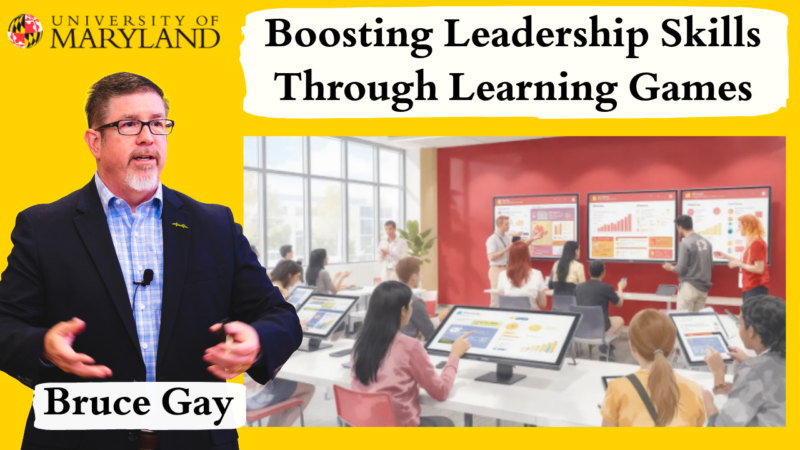
Join Bruce Gay as he shares insights from his experiences with learning games and their application in both online and in-person training.

Video presentation link is included at the end of this article.
Game On: Why Learning Games Belong in Leadership and PM Training
Eight hours in front of a screen is a tough ask for any adult learner, especially when the content is dense, abstract, or heavily process‑driven.
Traditional lectures and slide decks often struggle to keep project managers and leaders engaged long enough for real behavior change to take root.
Bruce Gay, a project management professional and certified Scrum Master based in Pittsburgh, has been experimenting with a different approach: using learning games to teach soft skills.
Rather than treating leadership, stakeholder management, and risk thinking as purely theoretical topics, he uses structured games and simulations to mirror real‑world project challenges—angry stakeholders, failing subcontractors, sudden leadership loss, and more.
What is the Goal?
Make both online and in‑person training more engaging and more realistic, so project professionals can safely practice critical thinking, problem solving, and collaboration before the “real” crisis hits.
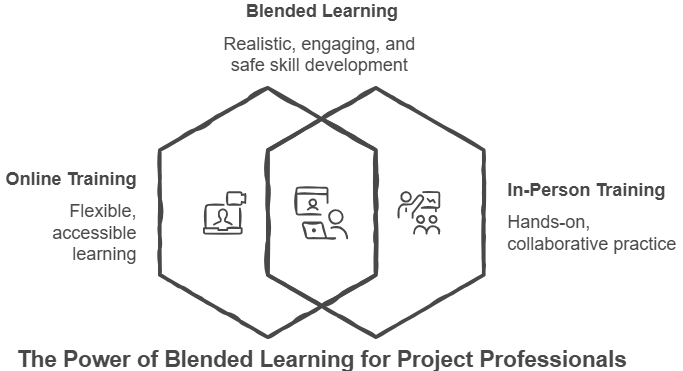
Using Games to Simulate Real Project Problems
Instead of talking about project risk and stakeholder issues in the abstract, Bruce uses card‑based scenarios to drop participants directly into realistic situations.
One example is the “Project 9‑1‑1” game, where learners manage a complex construction project that is rapidly going south, facing issues such as vendor quality failures, angry stakeholders, and even the sudden loss of a key sponsor.
Each card presents a specific challenge and invites participants to decide what they would do.
For example:
-
A critical subcontractor is introducing major quality issues into the work—how do you resolve it?
-
Your stakeholders are angry and dissatisfied—what steps do you take to manage them and rebuild trust?
-
A key sponsor or leader suddenly passes away or leaves the organization—how do you address both the emotional impact and the practical gap?
By working through these scenarios, project managers and leaders are forced to think beyond process checklists.
We must consider contract terms, communication approaches, emotional dynamics, succession planning, and what “good” stakeholder management looks like in messy, human situations.
What Learning Games Actually Develop
These learning games are not about entertainment; they are designed to exercise the same skills you rely on when projects get difficult.
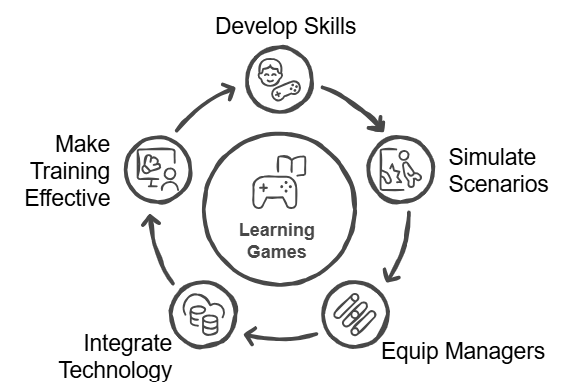
There are several capabilities that games help develop for project managers and leaders.
-
Critical thinking and problem solving:
Scenarios like budget cuts, quality failures, or leadership loss push you to diagnose root causes, weigh options, and choose a course of action—before you face them on a live project. -
Stakeholder and emotional management:
Situations involving angry stakeholders or the death/departure of a key sponsor surface real emotions. Games create a safe space to think through listening first, acknowledging grief, managing expectations, and planning succession without the pressure of an actual crisis. -
Collaboration and communication:
When participants work in small groups, they propose different responses, negotiate, and compare approaches. The discussion around the card often becomes more valuable than the “right” answer, as teams practice how they would talk through tough decisions in real life. -
Engagement and retention for adult learners:
Bruce notes that online and full‑day sessions are hard on adults. Games bring energy back into the room, increase participation, and make it more likely that people will remember and apply what they learned two or three months later.
Because the scenarios are built to feel real, participants report genuine emotional reactions and a sense that they are rehearsing for the kinds of situations that could easily occur on their own projects.
Designing and Integrating Learning Games into Your Training or Team Work
Bruce emphasizes that effective learning games start with clear objectives, not with the mechanics of the game itself.
You first decide what you want learners to practice—risk management, stakeholder engagement, decision making, or leadership under pressure—and then design scenarios that target those skills.
In some cases, simple printed cards and realistic prompts are enough to spark powerful discussion and insight.
You also need to be intentional about time and structure.
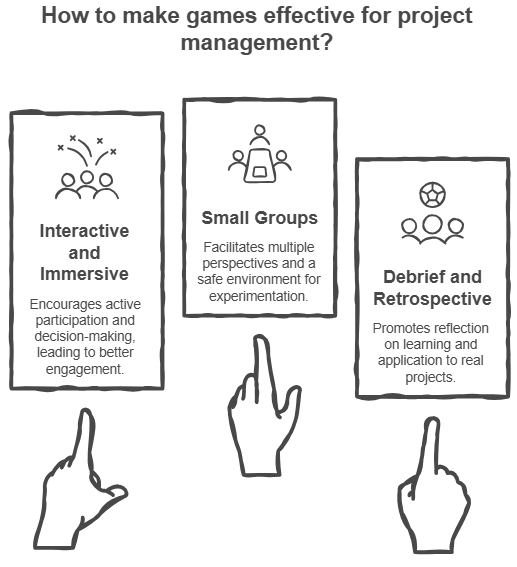
Games work best when they are:
-
Interactive and immersive, with participants actively discussing and deciding, not just listening.
-
Run in small groups, so multiple perspectives emerge and people feel safe to experiment.
-
Followed by a debrief, retrospective, or after‑action review, where the group reflects on what they did, what they learned, and how it applies to real projects.
Bruce’s own journey started with low‑cost prototypes—handwritten cards on construction paper tested with colleagues—before evolving into a more polished “Project 9‑1‑1” format.
He notes that while technology‑heavy simulations and VR environments exist, many organizations can achieve strong learning outcomes with mid‑cost, scenario‑based games that are easier to build and adapt.
Bringing It All Together
For project managers and leaders, learning games offer a practical way to rehearse for the inevitable crises, conflicts, and tough calls that come with complex work.
Instead of only hearing about best practices, your teams can safely “live through” realistic scenarios—subcontractor failures, angry stakeholders, leadership loss—and practice how they would respond.
Bruce Gay’s experience shows that you do not need expensive technology to get started.
With clear learning objectives, well‑crafted scenarios, small‑group discussion, and thoughtful debriefs, simple games can significantly boost engagement, sharpen soft skills, and prepare professionals to lead more effectively when it really counts


Project Management Symposium
Like this presentation?
You should join us at this year’s Project Management Symposium.
Visit our Website HERE to learn more!
Project Management Programs
Are you looking to expand your project management skills?
With more than 50 courses and 17 professional certifications, our programs are built by industry experts and UMD faculty to address real-world challenges in today’s workplaces.

Some of our most popular certifications include:
-
- Agile Project Management – Navigate complex projects with adaptive frameworks.
- Construction Management – Strengthen your management expertise in construction projects.
- Artificial Intelligence in Government Procurement – Unlock the power of artificial intelligence to revolutionize government procurement.
- Project Management Professional (PMP) Exam Prep Training – Prepare for the PMP exam with confidence.

Posted by mfriday on February 9, 2026
